There is nothing particularly wrong with MMP that a little political adulthood and some constitutional housekeeping cannot begin to put right.
The votes have been counted, the calculators put away, and Aotearoa New Zealand has produced a Parliament that does not fit comfortably into anyone’s preferred seating arrangement. Already, the prospect of another election is being floated, as though the voters have delivered the wrong furniture and must be asked to assemble it again, preferably according to the manufacturer’s instructions.
Perhaps the voters have done precisely what democracy invited them to do.
The November election has given us 130 parliamentarians, ten more than the customary 120. National, ACT and New Zealand First have 65 seats between them, one short of a majority. The smaller parties now occupy that awkward space between political ambition and the arithmetic required to satisfy it.
This is not necessarily a crisis. It is a conversation waiting to happen.
We have lived with Mixed Member Proportional representation for thirty years, yet a certain nostalgia persists for the old two-party arrangement, when one large party could govern with the confidence of a landlord and the other could spend three years complaining about the wallpaper.
National and Labour, despite their carefully cultivated differences, inhabit much the same political house. They may quarrel about the furniture, the heating bill and who should pay for repairs, but neither shows much inclination to question the foundations. Their disagreements over taxation, public services and regulation are real enough. Yet their acceptance of the prevailing economic order is remarkably similar.
This is hardly a New Zealand peculiarity. Across established democracies, the old centre-left and centre-right parties have discovered that voters are no longer quite so obedient. Political loyalties, once handed down with the family silver and grandmother’s opinions, have become negotiable. People are looking elsewhere, sometimes out of conviction, sometimes frustration, and occasionally because the alternatives have not yet disappointed them.
Smaller parties have emerged to collect these scattered loyalties. Some arrive carrying carefully developed philosophies; others bring grievances wrapped in flags. A few appear to regard political compromise as a communicable disease.
Nevertheless, their voters exist.
Democracy does not require us to admire our political opponents. It requires us to recognise that their supporters possess the same right to parliamentary representation as everyone else. The Greens, ACT, NZ First, Te Pāti Māori and Opportunity cannot simply be wished away because their presence makes the parliamentary arithmetic untidy.
A Parliament in which everyone agrees would, after all, be a rather expensive way of holding a meeting.
There is, however, a genuine problem lurking beneath the present arithmetic.
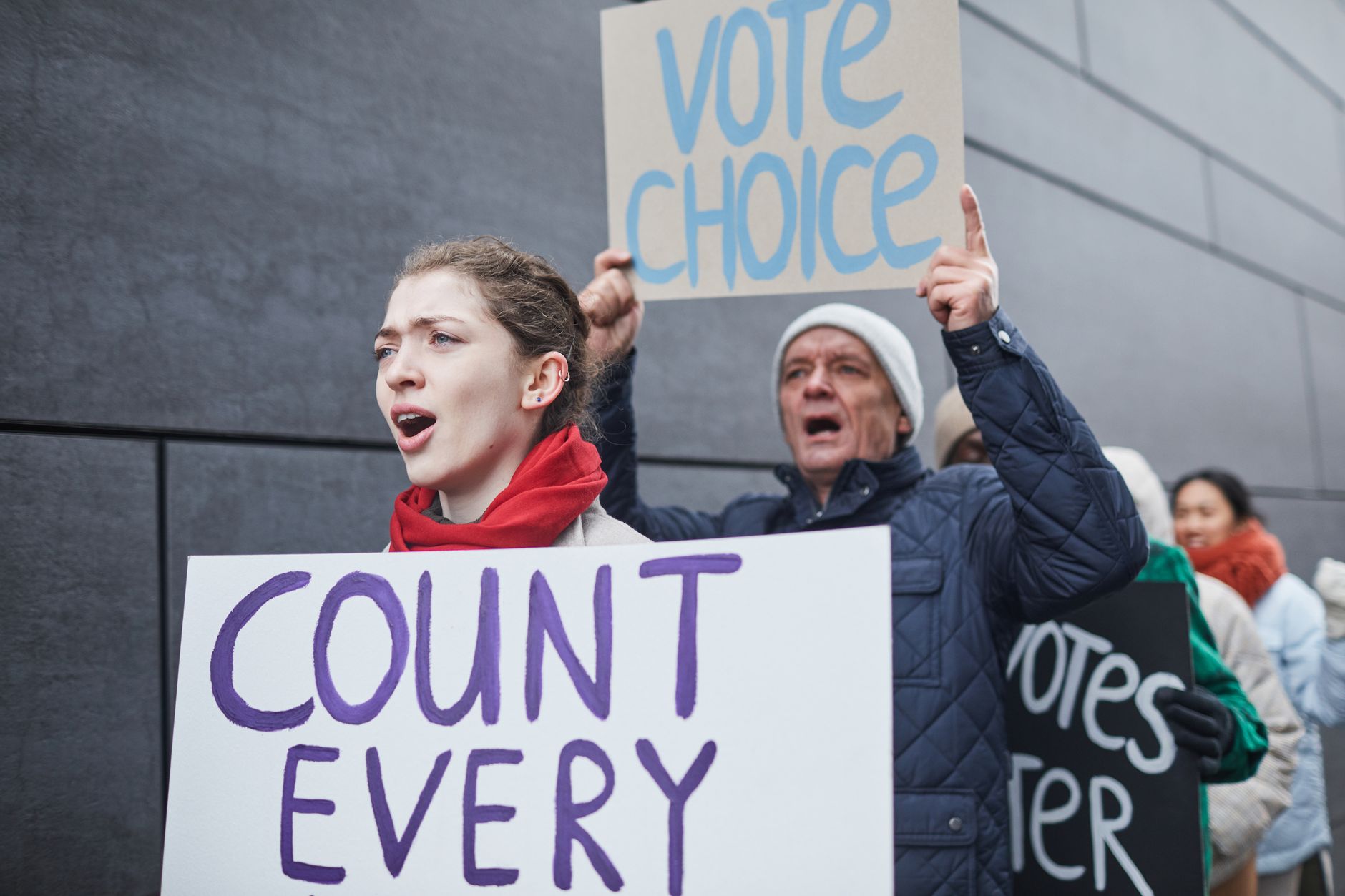
Our Parliament has acquired ten additional members through overhang, that peculiar arrangement under which a party winning more electorate seats than its party vote entitles it to keeps the seats anyway. Parliament expands to accommodate the discrepancy, rather like a family dining table at Christmas, where another chair is squeezed between the sideboard and an increasingly resentful uncle.
The principle is understandable. Electorate winners should not be casually dismissed because the party vote produces inconvenient numbers. But the consequences deserve examination.
Consider a deliberately absurd experiment. Suppose every National supporter gave the party vote to ACT while continuing to vote for National’s electorate candidates. National could retain dozens of electorate seats with virtually no party votes, while ACT acquired a generous allocation of proportional seats. Reverse the arrangement, sending ACT’s party votes to National, and the result changes dramatically.
The voters have not multiplied. Their political loyalties have not necessarily changed. Yet Parliament can swell or contract according to the direction in which the votes are poured.
It is an intriguing mathematical trick, although perhaps not one on which to build a constitutional future.
Split voting itself is perfectly legitimate. Indeed, it is one of MMP’s virtues. A citizen may admire a local candidate without wishing to endorse the candidate’s party. That is political discrimination in the best sense of the word.
The difficulty lies in allowing the mechanics of representation to produce results increasingly detached from the proportions expressed through the party vote.
This is where our politicians might demonstrate a little maturity.
Already, speculation about another election is creeping into public discussion. Certainly, if no government can command parliamentary confidence, returning to the electorate may eventually become necessary. But an election should not become the political equivalent of shaking the vending machine because it has delivered the wrong packet of chips.
The voters have spoken. It is not their responsibility to keep speaking until politicians hear something agreeable.
National, Labour and the smaller parties should negotiate whatever workable government this Parliament permits. They should also commit, during the present term, to an independent and genuinely cross-party examination of MMP’s proportionality and overhang provisions.
There is no need to begin with a predetermined answer. Fixing Parliament at exactly 120 seats may create difficulties of its own. Protecting every electorate victory while maintaining strict proportionality is not always mathematically possible. Such choices deserve careful public consideration rather than a hurried parliamentary bargain.
A referendum may or may not be legally required, depending on the reforms proposed. But even a referendum process has virtues beyond the final counting of votes. It would require the country to examine its electoral machinery, understand its peculiarities and decide what compromises it is prepared to make.
Most New Zealanders need not master Sainte-Laguë calculations. But they are entitled to know why 120 MPs can become 130, and why shifting votes between two friendly parties can make the parliamentary walls appear to move.
MMP has revealed something that the old electoral system was rather good at concealing: New Zealanders do not all think alike. They never did. We merely arranged our elections so that much of their disagreement could be safely ignored.
Now the disagreement sits in Parliament, occupying seats, drawing salaries and insisting on being heard.
That is not democracy’s embarrassment. It is democracy’s achievement.
A democracy has not failed because its citizens disagree. It begins to fail when its politicians regard that disagreement as an obstacle to government rather than the very reason Parliament exists.
The voters have completed their examination. It would be refreshing if, after thirty years of MMP, their representatives finally graduated.

