Multicultural societies are often discussed through a familiar opposition. Assimilation is presented as the demand that migrants abandon their language, customs, religion and inherited ways of life, while integration is treated as the more generous alternative, allowing people to belong without becoming culturally identical. That distinction remains important. Yet it leaves another question largely untouched: what happens when institutions that reject assimilation begin organising diversity into simplified cultural categories of their own?
This is where multiculturalism becomes more complicated than the language of inclusion usually allows. A society may rightly resist forcing minorities into the habits of the majority, while at the same time encouraging minorities to fit themselves into tidy, recognisable identities that are easier for governments, councils, funders, event organisers and corporations to understand. Diversity is not abolished. It is arranged.
The problem begins with aggregation. Public institutions rarely encounter migrants as individuals living within complicated networks of class, religion, generation, language, region, family history and personal belief. They encounter “the Indian community”, “the Chinese community”, “the African community”, “the Muslim community”, and other large categories that are administratively useful but socially crude. Once those categories are created, organisations emerge to represent them, festivals are funded to display them, leaders are invited to speak for them, and public recognition gradually strengthens the categories themselves.
The result can be a peculiar reversal. Government should often disaggregate society in order to understand disadvantage properly. It needs to know whether outcomes differ by income, gender, age, migration pathway, locality, language or employment status. Yet multicultural policy frequently moves in the opposite direction. It aggregates people in order to make diversity visible.
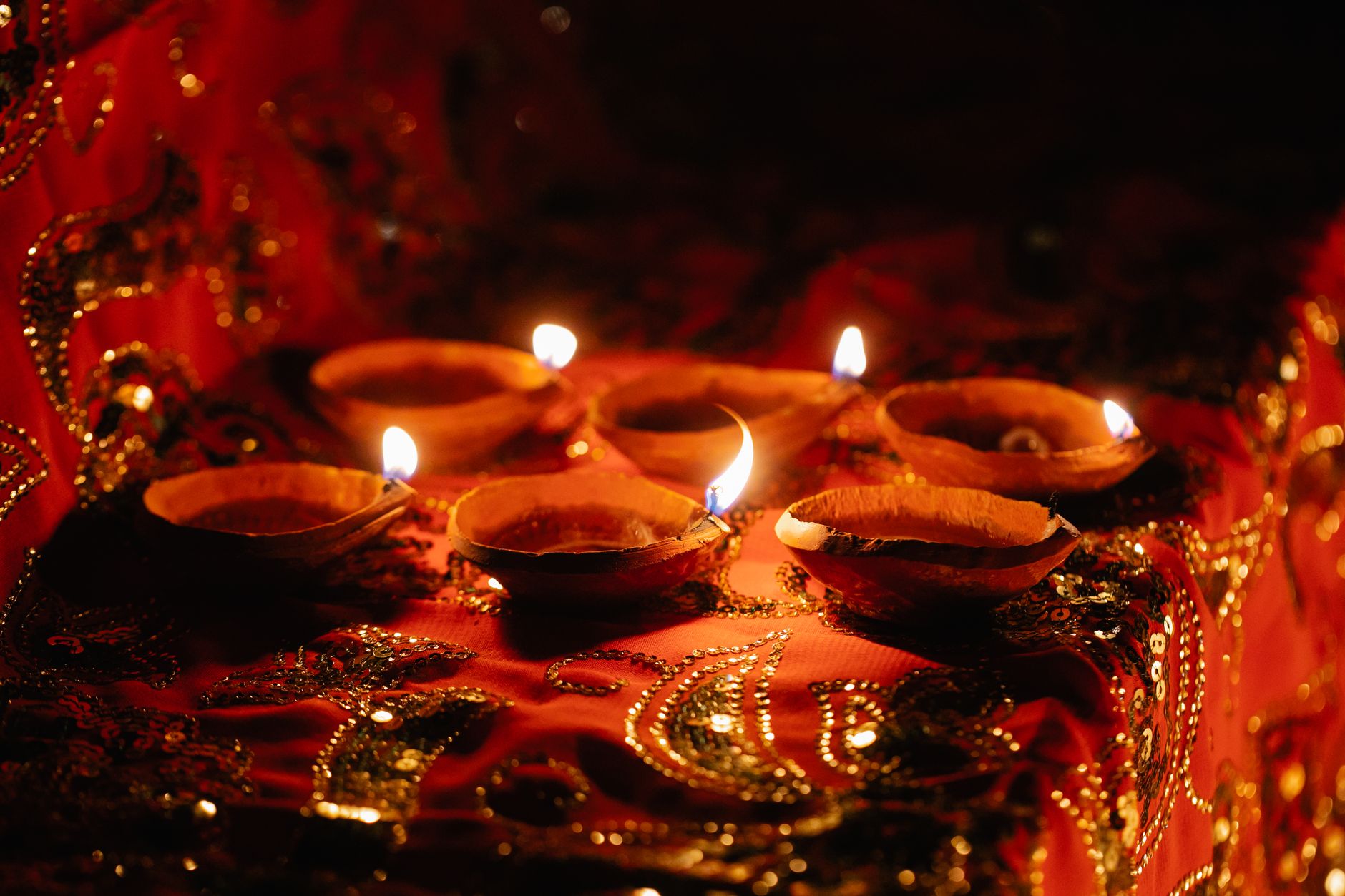
Diwali in Aotearoa New Zealand offers a particularly revealing example. Publicly, it is now commonly presented as the “Festival of Lights”, a phrase so broad and agreeable that almost anyone can enter it. Light becomes hope, goodness, unity and togetherness. The religious complexity recedes. Regional difference recedes. Competing traditions recede. What remains is a civic symbol that is easy to sponsor, easy to market and easy to place on a stage.
The phrase appears harmless because it is harmless. That is precisely why it works so well.
A festival with multiple histories and uneven importance across different parts of India becomes a single cultural object. Families for whom Diwali was never the central annual celebration are nevertheless drawn into its orbit once it becomes the dominant public representation of Indian identity abroad. Other festivals, other calendars and other regional traditions begin to appear secondary, not because they have necessarily become less important within private life, but because public institutions have selected one celebration and amplified it.
Sapna Samant confronted this problem directly in her 2010 documentary Dance Baby Dance: Naach Gaana Hum Aur Tum. The film examined the representation of the Indian community through the Bollywood dance competition associated with Auckland’s Diwali Mela and asked what it actually meant to be “Indian” in New Zealand. Samant later described the process more sharply as the “Bollywoodisation” of the Indian diaspora, arguing that an exotic, easily recognisable India could be displayed without requiring a more difficult conversation about culture, identity, social space and equality.
One of the documentary’s most revealing moments comes almost casually. A Bollywood actor of Bengali heritage, invited to participate in the New Zealand Diwali celebration, explains that Diwali had not been a major celebration in her own household. The observation lasts only a moment, but it unsettles the larger spectacle surrounding it. If somebody brought from India to embody the celebration does not herself come from a social world in which Diwali occupies the same central position, then the apparently natural connection between “Indian community” and “Diwali” begins to look much less natural.
What we are seeing is not simply cultural preservation. It is cultural selection.
Alison Booth’s later study, Whose Diwali Is It? Diaspora, Identity, and Festivalization, provides an academic framework for understanding the same process. Examining Auckland Diwali between 1998 and 2013, Booth traces its transformation from a community celebration into a major civic and cultural-tourism event. Her concern is not simply that the festival became larger. She examines how government involvement, producer relationships, political interests and event management altered the ways in which diasporic culture was represented. Booth also discusses Samant’s documentary as an important criticism of the government-sponsored celebration and of the limited picture of Indian cultural diversity it could produce.
This is where festivalisation becomes more than an events-management phenomenon. Once selection is repeated through funding, sponsorship, publicity and political attendance, it acquires authority. The selected version of culture starts appearing representative simply because it is the version most often represented. A public festival may then begin reshaping the community it claims merely to reflect.
The same process becomes visible in arguments over food. Hindu traditions are not uniform in their attitudes towards vegetarianism. Some communities regard vegetarian food as central to religious observance, while others have long incorporated fish or meat into ordinary and sometimes ritual life. Bengali Hindu traditions are an obvious example, as are a number of South Indian and Himalayan hill-state practices. Yet once a large civic Diwali is organised under a single Hindu or Indian umbrella, pressure can emerge for one dietary tradition to become the default.
At that point, the question is no longer merely what is served at a festival. The more important question is who has acquired the authority to define proper culture.
This reveals a form of assimilation that conventional multicultural discussion does not always notice. The familiar anxiety is external assimilation, in which majority society expects migrants to become culturally indistinguishable from everyone else. But there is also internal homogenisation, in which one interpretation inside an aggregated minority becomes the public norm for all the others.
The irony is considerable. A system designed partly to protect minorities from assimilation may end up supporting assimilation within minorities.
The “Festival of Lights” label adds another layer. It translates religious and regional particularity into something almost infinitely portable. Light overcoming darkness can belong to everyone. Hope, harmony and togetherness cause little discomfort. Such language enables the festival to move easily from religious practice to civic spectacle and from civic spectacle to corporate sponsorship.
But universalisation works in two directions. The wider population is invited into a softened and universalised Diwali, while heterogeneous Indian communities are simultaneously drawn towards Diwali as their shared public identity. The mainstream audience is assimilated into a culturally thin version of the festival, while minority traditions are assimilated into a culturally thick claim that Diwali represents them all.
The process does not require conspiracy or malicious intent. In fact, it can emerge quite naturally from administrative convenience. Governments need organisations to consult. Councils need events to support. Funders need applicants. Corporations need sponsorship opportunities. Politicians need public occasions at which diversity can be acknowledged visibly. A fragmented and contradictory social reality is difficult to manage, while a branded festival, a recognised umbrella body and a handful of community leaders are comparatively easy.
A thousand private histories are difficult to govern. A festival is easy. Dozens of religious and regional traditions are difficult to explain. “Festival of Lights” is easy. Internal disagreement is uncomfortable on a public stage. Dance, food, colour and speeches about diversity are easy.
The problem is that convenience can slowly become cultural authority.
This is why Samant’s criticism remains important. Her objection was not to Diwali itself or even to the Bollywood competition. She explicitly located the difficulty in implementation and institutionalisation. She also asked a question that broadens the discussion beyond Indian identity alone: how does this model of multicultural celebration relate to tangata whenua, and what place does it create for migrants as tauiwi? In other words, cultural recognition cannot simply be reduced to public institutions placing different ethnic performances alongside one another and declaring the result multiculturalism.
That question becomes even more important when public funding is involved. Funding does not merely support what already exists. It can alter the relative visibility of organisations, leaders, festivals and identities. Those able to organise an event, complete a funding application, attract political attendance and present a legible cultural package gain institutional weight. Repetition then makes this arrangement appear organic.
An administrative category becomes a representative organisation. A representative organisation produces a cultural event. The cultural event demonstrates the apparent existence of the category. Its visibility justifies further funding and consultation. Aggregation begins to reproduce itself.
This does not make cultural festivals worthless, nor does it mean public institutions should withdraw from them. The question is what happens when celebration becomes the principal language through which migrant communities are understood. Once that occurs, people can begin to appear less as citizens with complex social interests and more as inhabitants of cultural containers.
The consequences reach beyond festivals. Aggregation can obscure disagreements over gender, hierarchy, religion, family authority and generational change. It can elevate institutionally convenient leaders into representative positions they may not deserve. It can also weaken people within communities who are already contesting inherited practices, because criticism can be reframed as disloyalty to culture.
The language of respect then becomes strangely conservative. Culture is treated as something to be protected intact rather than something that has always changed through argument, borrowing, rejection and reinterpretation.
This same hesitation can spill into ordinary civic life. If cultural sensitivity becomes a reason to avoid criticism altogether, then conduct that should simply be judged by shared civic standards can become unnecessarily ethnicised or left unchallenged. Queueing, public cleanliness, respect for shared space, reasonable behaviour on public transport and concern for the dignity of others are not customs belonging to one dominant culture. They are part of the practical ethics of living among strangers.
The same principle applies to cultural practice. A tradition does not become immune from criticism simply because it is inherited. If a practice undermines dignity, restricts agency or imposes itself unfairly upon others, it should remain open to examination. Otherwise respect turns into silence, and silence is easily mistaken for tolerance.
The point, then, is not to step away from diversity, but to understand more clearly how it is organised in public life. Difference is rarely neat, and perhaps it should not be. A plural society should have enough confidence to recognise that communities contain their own disagreements, variations and contradictions, and that these are not signs of failure but part of the social reality itself.

