A brown migrant can live in Aotearoa New Zealand for ten years and still find themselves puzzled by two very simple questions. What exactly is ethnic, and what exactly is multiculturalism? They may have filled in enough government forms by then to know which box they are expected to tick. They may have attended Diwali celebrations, Race Relations events, multicultural festivals, community consultations and ethnic dinners. Politicians may have wished them Happy Diwali. Government departments may have invited someone who looks like them onto an advisory panel. Their children may have performed a dance at school. Yet something can remain unsettled. After all these years, are they simply a New Zealander who happens to have come from somewhere else, or is their ancestry now a permanent public identity that must travel with them everywhere?
There is an even stranger question hiding underneath it. Who decides?
The word “ethnic” looks innocent enough. It seems merely descriptive. Someone was born in India, China, Ethiopia, Chile or Fiji. Someone speaks Punjabi, Cantonese, Arabic or Spanish at home. Someone eats particular food, remembers particular stories and perhaps follows a particular religion. None of this seems difficult. Human beings have always carried memories from one place into another. Migration is almost as old as humanity.
The difficulty begins when description quietly becomes destiny.
Henry Ergas offers one way of seeing the problem. Ergas asks us first to think differently about culture itself. We often talk about culture as though it were an object. A person “has” a culture. A community “owns” a culture. Governments “preserve” cultures. Organisations “represent” cultures. We speak almost as though culture were a chair that could be placed in a room beside other chairs.
Ergas thinks this is a serious mistake.
The older meaning of culture gives us a clue. Culture is related to cultivation. We cultivate a field. Something grows. It changes through weather, soil, work and time. Culture works much the same way. It is not manufactured once and then kept inside a glass case. It grows because people live together. They argue, marry, work, borrow words, change recipes, raise children, abandon customs, invent new customs and discover that something they thought essential no longer matters very much.
A migrant therefore does not arrive carrying a sealed cultural suitcase that must remain unopened forever. Nor does the host society remain unchanged while migrants arrive. Both change.
Ergas uses the Australian Socceroos to explain this rather nicely. A football team contains different people. They do not cease being individuals when they put on the same jersey. They may have different families, histories, personalities and ways of seeing the world. But a team cannot function if each player insists on playing a private game according to private rules. They adjust to one another. They learn each other’s movements. They accept common rules and pursue a common purpose.
Hence the lovely idea: many journeys, one jersey.
That is much closer to acculturation than to either forced assimilation or official multicultural display. Nobody needs to erase their past. But neither does everybody’s past have to become a political institution.
Ergas points back to earlier migration into Australia. English, Irish, Scots and Welsh did not arrive as one homogeneous people. They brought religious quarrels, class differences, regional loyalties and historical grievances. Yet by living beside one another, working together and participating in common institutions, they gradually produced something different from each of their starting cultures. Nobody sat in a government department and designed the finished product. Culture emerged from life.
This brings Ergas to an old and rather beautiful word: adiaphora.
The word comes from ancient Stoic thought. Adiaphora means, roughly, “things indifferent.” It later became important during the Protestant Reformation and the terrible European religious conflicts that followed it. Europeans discovered, after much bloodshed, that a society could not survive if every disagreement became a matter of political life and death.
People had to learn that some differences could simply be left alone.
You may worship differently from me. You may eat differently. You may wear different clothes. Your whānau may follow customs that mine does not. We do not have to decide which of these makes you the better citizen. We do not even have to approve of one another. We merely need enough agreement about the things that allow us to live together.
This produced a useful division. Some things belong to the common civic core. The law matters. The constitutional order matters. Basic rights matter. The institutions through which we settle disputes matter. Some common means of communicating matter.
Around that core sits a very large area in which the state can simply say: that is your business.
The novelist D. H. Lawrence once used a wonderfully precise expression for something close to this. He spoke of an “indifference that is not apathy.”
That distinction matters. Indifference does not mean that I dislike your culture or refuse to learn about it. I may enjoy your food. I may come to your wedding. I may ask about the turban you wear or the festival you celebrate. But your ancestry does not determine how the law sees you, how I judge your citizenship or what political interests I assume you must have.
You are allowed to be interesting without being categorised.
This is where Ergas thinks modern multiculturalism has taken a wrong turn. Instead of enlarging the field of adiaphora, it has progressively reduced it. Things that might once have been treated as personal background are moved into the political foreground. Ancestry becomes a public category. Religion becomes an administrative category. Culture becomes something governments fund, count, consult, display and sometimes appoint representatives to speak for.
Something curious then happens.
The migrant who might have expected their ancestry to matter less as they became more settled can discover that institutions keep asking them to perform it.
Imagine our brown migrant after ten years in New Zealand. They have worked here, paid tax here, raised children here and acquired friendships that have nothing to do with ethnicity. Perhaps they read European philosophy and listen to American jazz. Perhaps they know more about rugby than about cricket. Perhaps they have become less religious than their parents. Perhaps they disagree profoundly with people who share their ancestry.
Yet the administrative world may still encounter them through a category.
Indian.
South Asian.
Ethnic.
Faith community.
Migrant voice.
There is nothing necessarily malicious about these labels. Often, they were created for good reasons. Governments want to know whether discrimination exists. Public bodies want underrepresented people to be heard. Funding programmes want communities to participate. But Ergas’s warning is that the category can slowly begin to manufacture the person it claims merely to describe.
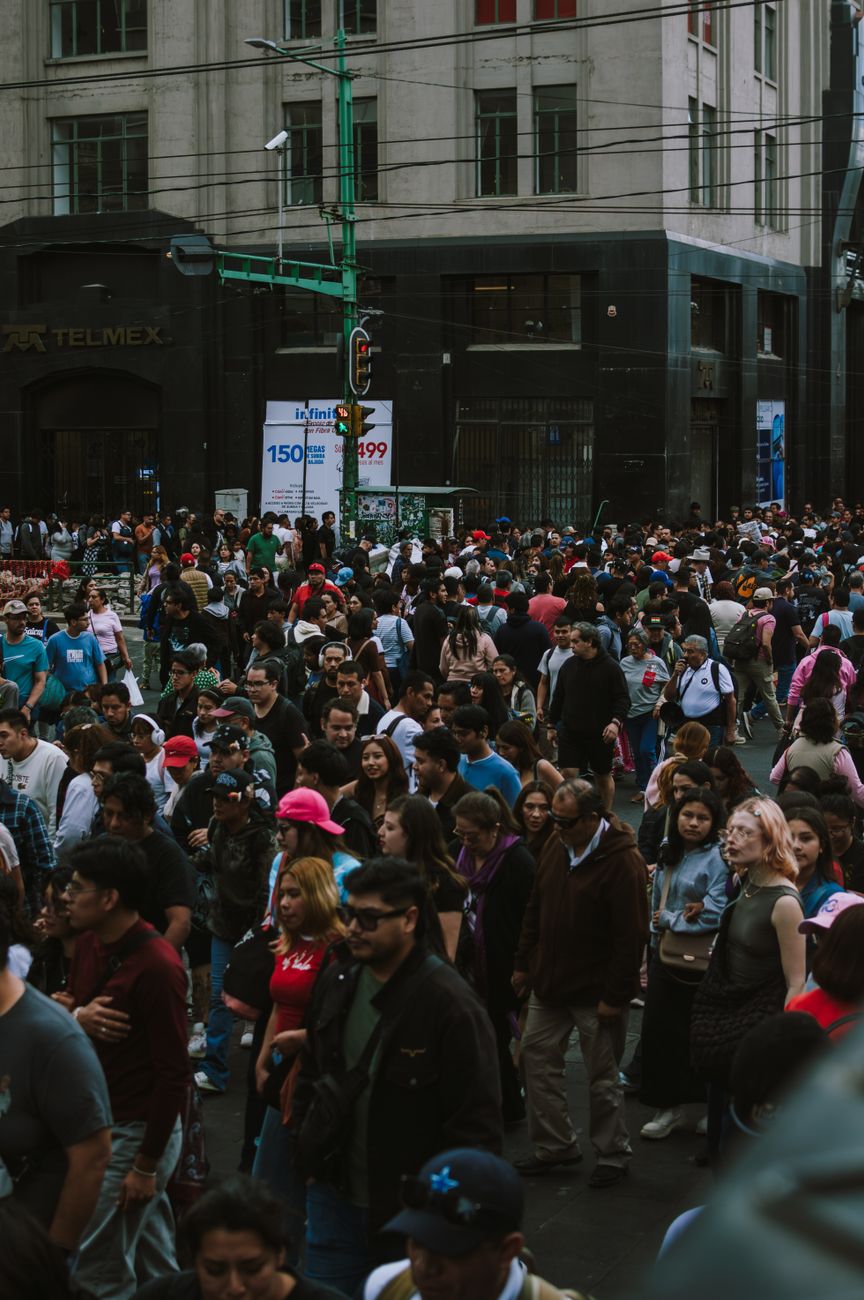
Ethnicity becomes destiny.
Once that happens, the state no longer sees only an individual citizen who happens to possess an ancestry. It begins to imagine a community with collective interests. Then somebody must speak for that community.
And here another strange creature appears: the community leader.
A politician cannot speak to 250,000 people one by one. A government department cannot consult everybody. So institutions search for intermediaries. Temple committees, mosque leaders, gurdwara officials, ethnic associations and prominent individuals begin to act as bridges between government and populations.
Soon election season arrives.
Political leaders visit temples, mosques and gurdwaras. Shoes are removed. Scarves appear. Photographs are taken. Greetings are delivered in languages politicians do not normally speak. The visit is presented as inclusion.
Sometimes it undoubtedly is.
But there is another side to it. The politician is also signalling that this institution, and perhaps the people standing beside the politician, represent a definable electoral community. The community becomes a bloc. The intermediary becomes a broker. Identity becomes political currency.
A peculiar contradiction now emerges. The modern liberal state says that religion and government are separate. Yet the same state can become intensely interested in religious institutions when those institutions provide access to demographic constituencies.
Religion is private on Monday and politically useful on Saturday.
This is where the idea of adiaphora becomes especially helpful. If religious identity truly belongs to the area in which government is indifferent, then a Sikh, Hindu, Muslim, Christian or atheist enters public life primarily as a citizen. But if ethnicity and religion become instruments of public administration, they cease to be things indifferent. They become ways through which recognition, consultation, funding and political access are organised.
The problem becomes even more complicated because there is no real ethnic community in the singular.
Take Indians. What exactly is “the Indian community”? India contains languages, religions, castes, regions, political traditions and philosophical disagreements of astonishing variety. A Punjabi Sikh and a Tamil Hindu may have almost nothing culturally in common except an immigration form on which somebody has placed them within the same broad category. A secular Bengali intellectual may have less in common with a religious Bengali neighbour than with a secular Pākehā colleague.
Yet bureaucracies require boxes.
Boxes are useful because governments cannot administer infinity.
But human beings do not fit comfortably inside them.
The danger comes when the box stops being a statistical tool and becomes a theory of the person.
Then the Punjabi must have Punjabi interests. The Muslim must have Muslim interests. The Indian must have Indian interests. The “ethnic community” must have ethnic interests. Representatives appear to explain these interests to the state.
There is no obvious exit door.
An individual who says, “Actually, none of these people speaks for me,” becomes almost unintelligible within the system because the system was designed precisely to find somebody who does.
There is another curious consequence. The very system that celebrates diversity can end up producing sameness.
Walk through enough officially sponsored multicultural festivals and eventually the pattern becomes familiar. There will be colourful clothing. Food stalls. Dancing. Music. Flags. Children performing. Speeches about diversity. Photographs of smiling public officials.
Diwali becomes lights, dancing and sweets.
Chinese New Year becomes dragons and dumplings.
Other traditions receive their own easily recognisable public package.
The deeper arguments inside these traditions disappear.
This is where Stanley Fish enters the story.
Fish, a literary theorist and legal scholar, wrote an essay in 1997 with the wonderfully provocative title “Boutique Multiculturalism, or Why Liberals Are Incapable of Thinking about Hate Speech.” His argument begins at almost the opposite philosophical end from Ergas, yet the two thinkers unexpectedly meet in the middle.
Fish calls much of modern multiculturalism “boutique multiculturalism.”
Imagine a boutique shop. It contains attractive things selected for display. The difficult bits have been left in the warehouse.
Boutique multiculturalism loves cultural difference when difference is enjoyable. It likes restaurants, clothing, music, art and festivals. It enjoys what Fish describes as a cosmetic relationship with culture. Diversity becomes something to taste, watch, photograph and congratulate ourselves for enjoying.
The trouble starts when culture stops being decorative and begins to believe something.
Suppose a religious tradition holds a belief that directly contradicts secular liberal values. Perhaps it has a strict idea about gender. Perhaps it regards some behaviour accepted by wider society as morally wrong. Perhaps it believes religious law has greater authority than individual choice.
Suddenly multicultural celebration becomes much less comfortable.
The liberal multiculturalist who happily ate the food may now say: you cannot believe that here.
Fish’s point is not necessarily that the objectionable belief should be allowed to rule. His argument is deeper and more uncomfortable. Fish says liberalism should admit what it is doing.
It is not neutral.
A liberal society has beliefs too.
Individual autonomy is a belief. Equality before the law is a belief. Freedom of conscience is a belief. Secular government is a belief. The protection of individual rights against religious or communal authority is a belief.
We may have very good reasons for preferring these beliefs. Fish’s point is simply that calling them neutral does not make them neutral.
This produces the problem Fish calls “strong multiculturalism.”
A truly strong multiculturalism would have to respect a culture even when that culture rejected multiculturalism itself. Suppose a religious group sincerely believed apostasy should be punished. Would a liberal state tolerate that practice in the name of respecting cultural difference?
Obviously not.
And the moment it refuses, the limit of multiculturalism becomes visible.
The state is effectively saying: you may be different, provided your difference remains inside boundaries established by us.
You may wear the clothes.
You may cook the food.
You may sing the songs.
You may worship.
But when your deepest belief collides with our deepest belief, ours wins.
Fish therefore concludes that complete multicultural neutrality is impossible. Every political community eventually protects some principles against others. A liberal democracy is no exception.
This is precisely why his argument becomes so important when we reach hate speech.
People often speak about hate speech as though the problem were simply to discover the correct legal sentence. Define hatred carefully enough, pass a law, and the problem will be solved.
Fish would ask: solved according to whose understanding of harm, truth, dignity and permissible speech?
The moment the state draws a boundary around speech, it makes a judgement. Some expression falls inside legitimate disagreement. Some falls outside. Someone must decide where religious conviction ends and vilification begins. Someone must decide when criticism of a belief becomes hostility towards the people who hold that belief. Someone must decide whether a community has a right not to be offended, or whether individuals merely have a right not to be threatened or unlawfully discriminated against.
There is no culturally neutral place from which these decisions can be made.
That does not mean law is useless.
A society can prohibit threats. It can punish violence. It can protect people from intimidation. It can decide that some forms of incitement create enough danger to justify legal restriction. Liberal democracies already make such decisions.
But Fish helps us see why hate speech cannot be “solved” in the deeper sense.
The dispute is not really about words. It is about competing ideas of the good.
One person says, “My religion requires me to say this.”
Another says, “Your saying this denies my equal dignity.”
A third says, “Both of you must have freedom of expression.”
A fourth says, “Freedom ends when speech causes harm.”
Then somebody asks the question nobody can avoid: what counts as harm?
The law can draw a line.
It cannot make the philosophical disagreement disappear.
This is why Fish thinks liberals struggle with hate speech. Liberalism likes to imagine that neutral rules can referee clashes between worldviews. Fish says that eventually the referee must choose a side because the rules themselves arise from a worldview.
Ergas reaches the same difficult landscape by another road.
Where Fish worries that liberalism understates cultural difference, Ergas worries that multiculturalism overstates it.
Fish looks at the brown migrant and says: liberal society may be pretending that your deepest beliefs are just colourful accessories covering a universal secular person underneath.
Ergas looks at the same migrant and says: multicultural bureaucracy may be doing the opposite. It may be exaggerating your inherited identity until it becomes your political destiny.
Fish fears dilution.
Ergas fears imprisonment.
For Fish, the multicultural state says: “Be culturally different, but underneath you must become like us.”
For Ergas, the multicultural state says: “You are culturally different, and we will keep reminding you of it.”
The migrant is caught between the two.
One system asks them to become invisible.
The other keeps making them visible.
Perhaps this explains part of the strange experience of being brown in a modern multicultural democracy. A person can simultaneously be told that race should not matter and be invited to events because of race. They can be told that religion is private while politicians seek photographs in places of worship. They can be told that everyone is an individual while consultation documents classify them as a member of a community.
None of this requires conspiracy. Much of it grows from good intentions colliding with administrative convenience.
But Fish and Ergas both ask us to look at the result rather than the intention.
Fish says the result can be Disneyfied culture.
A living tradition becomes a civic performance.
Its inconvenient theology disappears. Its internal disagreements disappear. Its difficult history disappears. Government and corporate institutions are left with a safe package containing food, dance, music and smiling faces.
Ergas would add that once this packaged culture becomes administratively useful, organisations have an incentive to maintain it. Funding depends upon recognised communities. Advisory positions depend upon identifiable communities. Representation requires somebody to represent.
The categories reproduce themselves.
This may explain why a migrant can sometimes become more officially ethnic after migration than before it.
Back home, they were simply a person.
They may have thought first of profession, village, city, class, politics, personality or family. Nobody needed to remind them daily that they belonged to their own civilisation.
After migration, the surrounding society needs a name for the difference.
They become ethnic.
Then multicultural institutions arise to manage the ethnicity that the category itself has helped make politically important.
This is the point at which identity can become destiny.
Yet Ergas’s alternative is not cultural erasure.
His football metaphor matters precisely because every player remains an individual. Organic acculturation means people change one another through ordinary life. It happens at work, at school, in marriages, sports clubs, neighbourhoods, friendships and arguments.
In Aotearoa, however, Ergas’s Australian picture cannot simply be carried across the Tasman unchanged.
This country does not begin with an empty liberal field into which different migrant groups arrive and slowly blend. There is already a constitutional and historical relationship between tangata whenua and the Crown, expressed through Te Tiriti o Waitangi and still argued over today. Māori are not simply one more ethnic community alongside Indians, Chinese, Samoans or Iranians. Tangata whenua have a relationship to this whenua that later migrant groups do not possess.
That matters enormously.
A migrant may come to think of themselves as tangata Tiriti, a person whose belonging in Aotearoa exists within a political order already shaped by the relationship between tangata whenua and the Crown. That does not make the migrant less New Zealand. It simply means that belonging here cannot be understood only through the language of multicultural immigration.
Tūrangawaewae, the sense of having a place to stand, therefore raises a richer question than assimilation alone. A person may acquire a deep sense of belonging without claiming the same historical standing as tangata whenua. Belonging can grow through participation, responsibility, memory and relationship.
This is where ideas such as whanaungatanga become useful. Whanaungatanga is not merely the recognition that different groups exist. It points towards relationships made and maintained between people. Manaakitanga adds another layer: how people care for, respect and uphold one another. Kotahitanga points towards unity, but not necessarily sameness.
These ideas sit surprisingly comfortably beside the best part of Ergas’s argument. Social cohesion does not have to mean everybody becoming culturally identical. It can mean people forming durable relationships across difference while sharing institutions and obligations.
Nobody needs to design the final culture.
The important thing is that a shared civic canopy remains above everyone, while recognising that in Aotearoa that canopy has its own history and cannot be described as culturally blank.
Here Ergas becomes strongly classical liberal. Rights belong primarily to individuals. The law should protect the person rather than treating “culture” as though culture itself were a legal being.
Ergas considers group rights dangerous partly because groups contain weaker people.
Suppose government grants special authority or exemptions to a recognised cultural or religious community. Who exercises that authority?
Usually not an abstract culture.
Actual people do.
Often, they are established leaders, clergy, senior figures or institutional gatekeepers.
The state may believe it is protecting a minority from the majority while accidentally strengthening powerful members of the minority against weaker members of their own community.
A woman may disagree.
A young person may wish to leave.
A believer may lose faith.
A dissenter may reject the authority of the person government recognises as the community leader.
This is why Ergas insists on a single framework of law. The individual must always be able to step outside the group and still find the state waiting there as their protector.
Citizenship must contain an exit door.
This is perhaps one of the most powerful ideas in the whole argument.
Culture should be something a person can inhabit, reinterpret, combine with other things or leave.
It should not become a legal cage.
Fish would still tell Ergas that things are not quite so easy. What Ergas calls universal individual rights are themselves products of a particular liberal tradition. The state that insists on individual autonomy is not standing outside culture. It is enforcing its own.
Consider education.
A deeply religious community may say that certain teachings violate its faith and ask that its children be exempt.
The liberal state faces an uncomfortable choice.
If it allows the exemption, it may weaken its commitment to the child’s autonomy, common education or equality.
If it refuses, it reveals that its tolerance has limits.
Fish calls attention to precisely this contradiction.
Minor exemptions are easy.
The difficult exemptions are the ones that actually matter.
Allowing a particular item of clothing may cost the liberal state almost nothing. Allowing a community to remove its children entirely from teachings regarded by the state as essential is another matter.
At that point the boutique closes.
The dominant political order asserts itself.
Fish’s conclusion is darker than Ergas’s. Ergas thinks the problem can be improved through civic liberal renewal: stronger common institutions, equal law, individual rights, more confidence in the host society and a wider sphere of adiaphora.
Fish doubts that any political order can escape imposing itself.
Every society eventually says, “This far, but no further.”
That disagreement between the two thinkers is important because it prevents an easy ending.
Ergas gives us hope that society can depoliticise many differences.
Fish reminds us that some differences cannot be depoliticised because they involve competing claims about how people ought to live.
But this is not the only way the argument can be framed.
Bhikhu Parekh asks us to look harder at the common civic culture itself. A society, in his view, is not made up of strange cultures sitting around a neutral centre. The centre has a culture too. Its institutions, assumptions and ideas about the good life come from somewhere. Liberal political habits have histories just as religious and migrant traditions do.
Parekh therefore pushes the argument beyond a simple choice between assimilation and separation. If citizens from different backgrounds are going to inhabit a common political world, that world may itself have to remain open to conversation and change.
This does not mean every demand must be accepted.
It means the common culture cannot simply announce itself as neutral and finished.
Tariq Modood takes the argument in another useful direction. He asks whether national belonging itself can expand. Instead of imagining integration as migrants stepping into an already completed national identity, Modood argues for a multicultural form of national belonging in which people can become part of the national “we” without having to strip away every other attachment.
This is especially important for our brown migrant.
Perhaps the choice is not between becoming invisible and remaining forever ethnic.
Perhaps the national story can change too.
That is a more hopeful possibility than either Fish’s pessimism or the harder edges of Ergas’s classical liberalism. It suggests that integration may be a two-way process: newcomers change as they enter a society, but the society also changes as it learns how to include them.
In Aotearoa, this must still happen within the prior relationship created by Te Tiriti. The national “we” cannot simply be expanded by piling one migrant identity after another onto the country while treating tangata whenua as merely another cultural group.
This is where multiculturalism and bicultural constitutional history meet, and sometimes collide.
A successful multicultural society may therefore require us to become much more relaxed about shallow difference and much more truthful about deep difference.
Food should rarely become politics.
Ancestry should rarely determine public standing.
A person’s name should tell government almost nothing about their political beliefs.
Religious affiliation should not automatically produce political representation.
People should be free to form communities without being permanently imprisoned inside them.
Government should be wary of self-appointed brokers who claim to deliver whole ethnic populations.
Festivals can be enjoyed without pretending that festivals constitute multiculturalism.
At the same time, when genuine moral disagreements appear, society should stop pretending that all values can be harmonised by another diversity workshop.
Some disagreements are real.
Some beliefs conflict.
Some values cannot simultaneously govern the same public institution.
The answer is not necessarily to fear this.
A democracy exists partly because disagreement exists.
The crucial question is what happens next.
This returns our brown migrant to their original perplexity.
What is ethnic?
At its most innocent, ethnic is simply part of the story of where somebody came from.
It becomes dangerous when ancestry becomes a theory of what that person must think.
What is multiculturalism?
At its healthiest, multiculturalism could mean a society secure enough to allow enormous private difference while asking everyone to share a civic home.
At its weakest, it becomes boutique multiculturalism: diversity converted into food, costume, festivals and institutional branding.
At its most bureaucratic, it risks something worse: turning fluid human identities into administrative tribes.
Then ethnicity moves from biography towards destiny.
And what is identity destiny?
It is the moment when a fact about your origins begins determining what the state, politicians, institutions and even supposed community representatives imagine you are.
The state no longer merely notices your ancestry.
It begins organising you through it.
After ten years, twenty years or fifty years, the question remains attached to you.
Where are you really from?
Which community do you represent?
What does your community think?
Perhaps the most liberating answer is very simple.
I represent myself.
That answer does not destroy culture.
It may actually protect culture from bureaucracy.
Culture then returns to where Ergas thinks it belongs: among living people. It changes because they change. It survives where they find it meaningful. It disappears where they do not. It mixes with other things. Nobody needs permission to keep it and nobody needs permission to leave it.
The state protects the citizen.
The citizen makes the culture.
But there is an important qualification here.
Adiaphora does not require the state to pretend racism does not exist.
Sometimes the state must notice ethnicity precisely because unequal treatment follows ethnic lines. If one group is repeatedly excluded from employment, housing, education or public institutions, the state may need demographic information to see the pattern. A society cannot solve discrimination by refusing to measure it.
The danger begins at the next step.
A tool created to measure disadvantage can slowly become a permanent theory of citizenship.
A category that was useful for asking, “Are these people being treated unfairly?” begins answering a different question: “Who are these people politically?”
Those are not the same thing.
We may need to count people without defining them.
We may need to notice discrimination without turning ancestry into destiny.
That distinction is central to social cohesion. Cohesion cannot mean pretending everybody has had the same experience. Nor can it mean organising citizens forever according to the injuries or identities through which inequality was first measured. Whanaungatanga requires us to see both the person and the relationship. Kotahitanga becomes meaningful precisely because the people entering it are not identical.
This also gives us a more modest answer to hate speech.
Can hate speech be solved?
The dangerous forms can certainly be governed. Threats, intimidation and incitement can be confronted through law. Institutions can encourage civility. Citizens can answer bad speech. Communities can defend one another.
But no statute can remove the deeper conflict that Fish identifies.
There will always be arguments over where criticism ends and hatred begins, where faith ends and discrimination begins, where tolerance ends and surrender begins, and where freedom ends and harm begins.
The mistake is expecting multiculturalism to make these questions disappear.
It cannot.
A mature society does something harder. It creates common rules strong enough to contain disagreement while leaving as much human difference as possible outside politics.
This is where Ergas’s old word becomes unexpectedly useful for twenty-first-century Aotearoa.
Adiaphora.
Things about which the state does not need an opinion.
Perhaps the success of a diverse society should not be measured by how many identities government can recognise, fund and display.
Perhaps it should also be measured by how many identities government can safely leave to people themselves.
Not because the people carrying them do not matter.
Because they matter equally without being politically reduced to them.
There is, however, another argument waiting beyond this one.
We have talked here about culture, identity, recognition, liberal neutrality and the limits of multiculturalism. We have not really settled the question of citizenship.
That question needs its own discussion.
Will Kymlicka asks whether a liberal democracy can recognise minority and group-differentiated rights without abandoning individual freedom. His work forces us to ask whether some forms of group recognition might actually strengthen equal citizenship rather than weaken it.
Charles Taylor approaches the matter through the politics of recognition. He asks whether treating everyone exactly the same can itself become a form of injustice when people need their histories and identities publicly recognised in order to stand as equals.
Those questions complicate Ergas considerably.
If Ergas warns that recognition can become a cage, Taylor asks whether non-recognition can also wound.
If Ergas worries that group rights turn identity into destiny, Kymlicka asks whether some minority rights may be necessary precisely so individuals can participate as equals.
Parekh and Modood push in the same direction from different places.
This means the argument cannot end simply by declaring individual citizenship the winner.
We still have to ask what citizenship itself contains.
Is citizenship only equal legal status?
Does it include recognition?
Can it carry group-differentiated rights?
How does it work in a country where tangata whenua have claims that cannot be reduced to minority rights?
And how does a migrant become fully part of the political “we” without either pretending to have no history or being trapped permanently inside that history?
Those questions deserve another essay.
For now, our brown migrant may be entitled to one smaller conclusion.
They may finally acquire the privilege that multiculturalism originally promised but sometimes struggles to deliver.
They may become ordinary.
They can still speak Punjabi. They can still attend a gurdwara. They can still celebrate Diwali with friends if they wish, reject it if they do not, eat curry on Monday and fish and chips on Tuesday, argue with people from their birthplace, marry outside their community, change their politics, lose their religion, rediscover it, alter their name, support the All Blacks and complain about the weather.
They can practise manaakitanga towards neighbours whose beliefs they do not share. They can build whanaungatanga without pretending difference has vanished. They can seek tūrangawaewae without claiming the place of tangata whenua. They can participate in kotahitanga without surrendering individuality.
None of these choices needs to answer the question of what kind of citizen they are.
That may be the difference between identity and destiny.
Identity tells part of the story of who we are.
Destiny tells us that we are not allowed to write the next page.
A genuinely confident multicultural democracy should know the difference.


correct analysis and detailed fact finding of current and prevailing environment.