There is a particular mood to the road home on a Friday evening. The week has spent itself. People are thinking about dinner, children, groceries, a glass of something, perhaps nothing more ambitious than removing their shoes. The city is still moving, but its mind has already gone home.
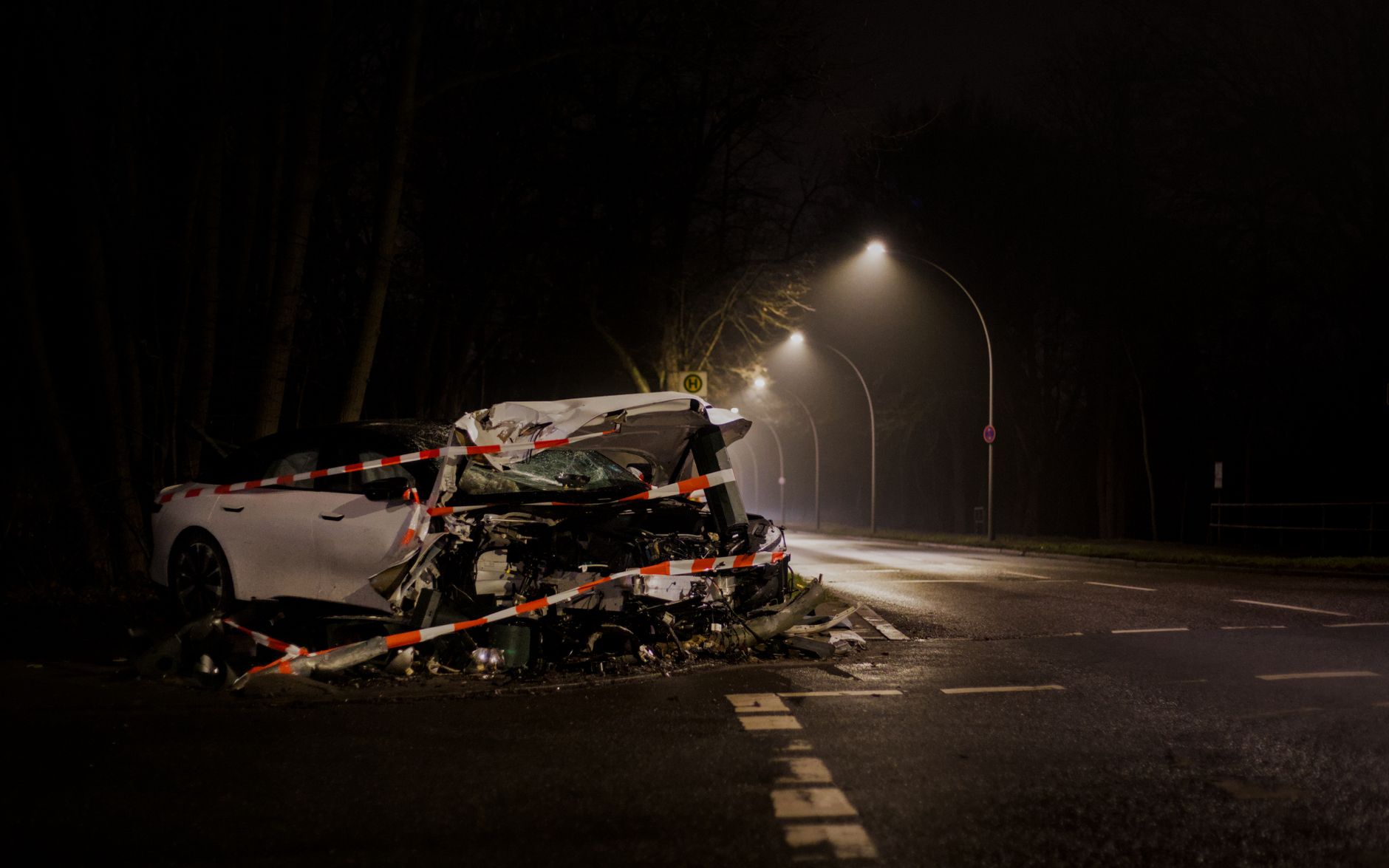
At about five o’clock yesterday, I was heading north through Ngauranga Gorge. “Heading” may be too energetic a word. We were crawling. Cars edged forward and stopped, edged forward and stopped again. Fire engines and Police vehicles came up behind us, and drivers did what they could to open a path. Somewhere ahead, a serious crash had closed southbound State Highway 1 between Tawa and Glenside. Emergency services had also partially occupied the right northbound lane.
A southbound crash had begun to consume both sides of the motorway.
The northbound delay itself was understandable. Emergency workers needed room. A serious crash is not staged for the convenience of Friday commuters, and no sensible criticism should begin by begrudging firefighters, Police or ambulance crews the space required to work safely.
But an emergency does more than close a piece of road. It tests everything built around it: the alternative routes, the interchanges, the public warnings, the diversion plan, and the ability of those managing the incident to see where the next blockage will form.
Wellington did not pass that test particularly well.
By the time I reached Johnsonville, its off-ramp was already crowded. I stayed on the motorway and left at Glenside instead. This was not cleverness so much as local knowledge. As a Tawa resident, I know the roads well enough to know where traffic tends to congeal. Even a modest disruption can turn the roundabout near Takapū Station, where traffic divides between Tawa and Glenside, into a stubborn little knot.
Last evening, it was not being asked to handle a modest disruption. It had become part of the official escape route for a closed motorway.
Southbound vehicles diverted through Tawa along Main Road, and then turned right at the Takapū Station–Glenside roundabout towards Glenside. At that junction, the heavy diverted stream met traffic approaching from Glenside and interchange traffic attempting to continue into Tawa. I approached from the Glenside side and had the advantage of turning left into Tawa. Others were not so fortunate. The competing movements had been funnelled into a small suburban roundabout never designed to swallow motorway volumes.
This was the real weakness exposed by the crash. Wellington may have roads labelled as alternatives, but it does not possess much genuine redundancy. The motorway and the local network are less like two separate routes than two drinking straws pushed into the same narrow glass. Block one, and the other is quickly overwhelmed.
NZTA’s public updates recorded the southbound closure, the partially blocked northbound lane and the growing delays. Motorists were told to allow extra time and consider alternative routes. But an alternative route is not created merely by naming one. It must be capable of carrying the displaced traffic, and its critical junctions must be treated as part of the emergency operation.
The Takapū Station–Glenside roundabout was one such junction. Once the diversion was established, its behaviour was entirely predictable. A continuous stream from one approach could deny usable gaps to another. Queues could spill backwards from the roundabout, through adjoining roads and towards the motorway. Traffic already slowed by the northbound incident restriction then encountered a local network that was itself beginning to seize.
I cannot say whether Police or traffic controllers manually managed that roundabout later in the evening. I had passed through it before any such intervention that I saw. But the question remains important: when did those managing the incident recognise that the diversion’s most vulnerable junction had become a second emergency site?
Manual control would not have made the evening painless. There were too many vehicles and too little road. But officers or specialist traffic controllers could have alternated the competing streams, stopped one movement from monopolising the roundabout, prevented vehicles entering when an exit was blocked, and kept the junction functioning badly rather than allowing it to fail completely.
There is a useful distinction here. The crash made delay unavoidable. Poorly managed traffic movement may have made gridlock worse.
That is what deserves examination. Not whether emergency services should have occupied a northbound lane. They plainly may have needed to. Not whether motorists should have expected inconvenience. Of course they should. The real issue is whether Wellington’s emergency traffic plan extended beyond closing the motorway and drawing a diversion arrow through streets that local residents already know cannot cope.
By evening, drivers had spent hours inside the answer.
A city’s transport resilience is not measured on an ordinary Tuesday morning when every lane is open and every junction behaves itself. It is measured on a wet or dark Friday evening, when one serious crash removes a section of road and thousands of people must be moved through what remains.
On this occasion, Wellington had no proper sideways escape. The motorway lost capacity in both directions, the diversion poured traffic into a known local bottleneck, and a small roundabout near a railway station became one of the most consequential pieces of transport infrastructure in the region.
People had only been trying to go home. The system showed them how little room it has for anything to go wrong.

