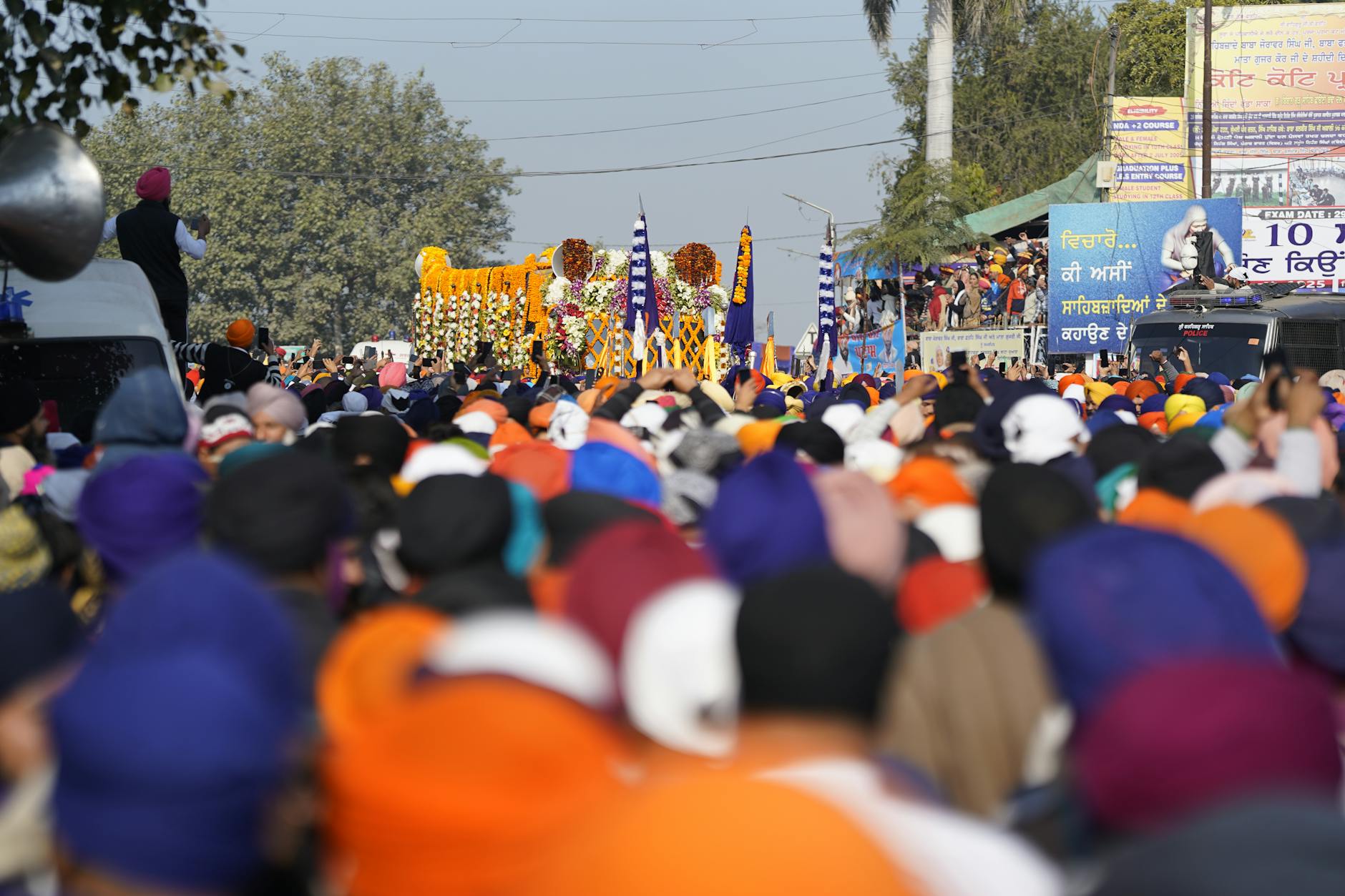
Two Sikh parades in Aotearoa New Zealand were recently confronted with haka performed in an overtly antagonistic manner. These were not spontaneous gatherings or informal street events. Sikh parades are planned months in advance. Permissions are sought well ahead of time from Police, city councils, and transport authorities. Routes are approved, traffic management plans are put in place, and organisers work closely with authorities to ensure the procession is peaceful, lawful, and safe for participants and the wider public. Within that setting, what occurred was not cultural interaction or parallel expression. It was an interruption imposed on a lawful event that had already met every civic requirement expected of it.
Haka carries meaning because it is grounded in tikanga, context, and responsibility. When it is lifted out of that grounding and redeployed as a confrontational street performance against another minority community, its meaning changes. It ceases to be relational and becomes symbolic force. The Sikh parade, already a layered public space shaped by religion, migration, ethnicity, and visibility, becomes a stage onto which intimidation is projected. The issue here is not that haka was visible, but that it was used deliberately to disrupt and unsettle a community that posed no threat and had acted within the law.
This is where a simple multicultural reading fails. Treating the encounter as culture meeting culture assumes that all cultural expressions operate on equal footing in public space. They do not. Symbols carry different levels of authority depending on who is allowed to deploy them, how they are protected, and how they are interpreted by institutions and the public. Haka carries moral and historical weight that exceeds ordinary protest. When that weight is used against another minority group, the encounter is no longer symmetrical. Calling it a clash of cultures erases the imbalance of power embedded in the symbols themselves and obscures who is insulated from consequence and who is left exposed.
A deeper explanation lies in how liberal multicultural societies manage race and conflict. As the philosopher Tommy J. Curry argues, liberalism presents itself as neutral and inclusive while quietly policing which forms of racial politics are acceptable. Difference is welcomed so long as it remains expressive rather than confrontational. Identity is celebrated when it fragments power and discouraged when it consolidates it. Collective presence that is peaceful and organised is tolerated, but collective action that appears assertive or disruptive is quickly framed as a problem. This framework does not eliminate racial hierarchy. It regulates how it can be challenged.
That helps explain why Sikh parades become an easy target. They are visible, orderly, and lawful. They assert presence without aggression. Precisely because of that, they are vulnerable to symbolic interruption. Performing haka against such a procession allows dominance to be signalled without physical violence while drawing on the moral protection afforded to Indigenous symbols. The Sikh community is placed in a no win situation. Responding risks being framed as disrespectful. Remaining silent means absorbing the intimidation. Liberal discourse then steps in to call for calm and mutual respect, while avoiding the harder question of why one group was permitted to impose itself on another in the first place.
The question of motive cannot be ignored. The group involved is not acting on behalf of a broad Māori mandate, nor within recognised tikanga. It is associated with a small church denomination whose public presence relies heavily on confrontation, spectacle, and media attention. Recent reporting on the financial position of Destiny Church shows an organisation under significant financial strain, with millions of dollars owed and entities placed into liquidation. In that context, it is reasonable to ask why highly visible street theatrics are being pursued at all. Public confrontation generates attention. Attention sustains relevance. Relevance can be converted into mobilisation and money. No accusation needs to be made for the pattern to be visible.
For readers still asking “but why,” the answer is straightforward. Because public spectacles shift focus away from organisational failure and toward perceived cultural battles. Because confrontation energises supporters more effectively than quiet decline. And because minority communities that are peaceful, visible, and rule abiding make convenient stages for symbolic performance precisely because they are unlikely to retaliate.
This is not about opposing haka or questioning its place in public life. It is about refusing its misuse. When cultural forms are stripped of responsibility and used as tools of intimidation, declining to engage with that performance is not disrespectful. It is a clear statement that culture should not be exploited to manufacture conflict or shield theatrics from scrutiny.
 Faultline Report